




The 10 Percent Fresh Food Challenge
- Posted on
- By Dr. Jill Tack, Board Certified Naturopathic Doctor
- Posted in cat nutrition, dog nutrition, Fresh Feeding for Pets, Fresh Food Challenge, Raw Toppers, Rawgust
- 0
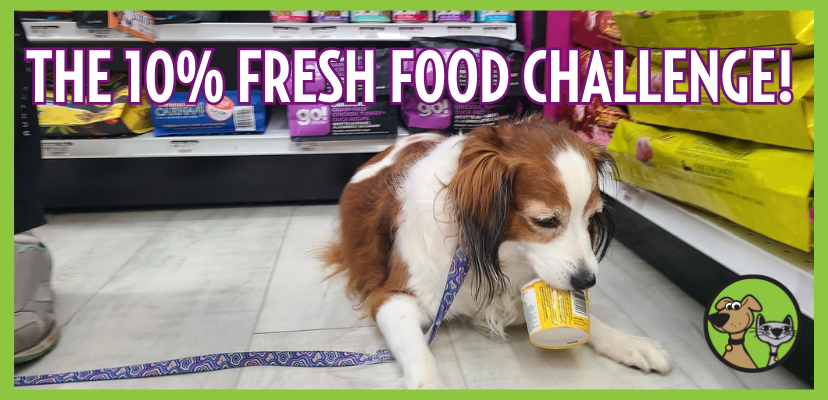
Seven realistic ways to introduce a modest fresh-food upgrade while preserving nutritional balance and controlling cost.
Feeding better does not have to begin with a freezer full of raw food and an entirely new routine.
Sometimes the most sustainable change is the smallest one.
The 10 Percent Fresh Food Challenge invites pet parents to replace or enhance a modest portion of the bowl with an appropriate fresh or raw addition. It gives you room to learn what your pet enjoys, understand safe handling, explore different formats, and build a habit without feeling pressured to change everything at once.
A small step still deserves a thoughtful plan.
What is the 10 Percent Fresh Food Challenge?
The challenge means making a measured fresh-food upgrade while keeping the majority of your pet’s familiar diet in place.
Depending on your pet and the products selected, that might mean:
- Adding a spoonful of complete raw food
- Using a fresh topper
- Replacing one meal several times a week
- Rehydrating freeze-dried raw food
- Adding an appropriate moisture-rich food
- Rotating a few balanced fresh options
When the added food is not complete and balanced, its quantity should stay limited so it does not significantly dilute the nutrient balance of the main diet.
Quick fresh-upgrade list
Easy additions may include:
- Complete frozen raw food
- Complete freeze-dried raw food
- Gently cooked complete food
- Moisture-rich canned food
- A species-appropriate commercial topper
- A small amount of single-ingredient food used appropriately
- Fresh water or product-approved rehydration (like bone broths)
Adding a modest amount of fresh food can make feeding feel more varied and moisture-rich, but the addition should be appropriate for your pet and should not unbalance the complete daily diet.
Why start with 10 percent?
Ten percent is not a medical formula or a perfect number for every pet. It is a simple mindset: start small enough that the change feels manageable.
Beginning gradually can help you:
- Observe digestive tolerance
- Test new textures and proteins
- Control costs
- Build confidence
- Reduce waste
- Create a repeatable routine
- Learn before making a larger transition
Some pet parents stay with a partial-fresh routine. Others eventually replace more meals. Both can be valid depending on the products, nutritional balance, budget, and pet.
Seven simple ways to try it
- Add fresh food to breakfast: A consistent morning routine makes the new habit easier to remember.
- Replace one dinner each week: Choose a complete and balanced fresh or raw meal and gradually increase frequency if it works well.
- Rehydrate freeze-dried raw food: Follow the package directions. Rehydration adds moisture and can change the aroma and texture.
- Use fresh food as a high-value reward: Reserve small pieces of an appropriate product for training while counting them toward the day’s intake.
- Freeze small portions: Pre-portioning helps reduce waste and makes busy days easier.
- Try a new format, not five new ingredients: Introduce one meaningful change at a time so you can tell how your pet responds.
- Ask for a budget-friendly option: Fresh feeding does not have to be all or nothing. Our team can help compare complete foods, toppers, package sizes, and cost per serving.
Do fresh additions need to be balanced?
It depends on how they are used.
A complete and balanced food can replace a meal when fed appropriately. A complementary topper or treat should only make up a controlled part of the overall diet.
The more frequently a food is fed, the more important its nutritional completeness becomes.
This distinction matters:
- Complete and balanced: Designed to provide the required nutrients for a stated species and life stage
- Intermittent or supplemental: Intended only as an addition, topper, treat, or occasional food
Check the nutritional adequacy statement instead of relying only on the marketing language on the front of the package.
What pet parents ask
Will a little fresh food really matter?
Even a small upgrade can introduce a new texture, aroma, moisture source, and mealtime experience. The response will differ by pet.
Can I add fresh food to kibble?
Many pet parents do. Choose an appropriate addition, introduce it gradually, account for the extra calories, and keep the overall diet balanced.
Is this helpful for picky pets?
Fresh aromas and textures may make meals more interesting, although pickiness can have behavioral, medical, environmental, or dietary causes.
Read More: Why Pets Get Picky and How Fresh Feeding Helps
Will it upset my pet’s stomach?
Any sudden dietary change can cause digestive upset. Begin with a small amount and increase gradually.
FAQ
Does it need to be exactly 10 percent?
No. Think of 10 percent as a manageable starting concept, not a requirement. The appropriate amount depends on the product and your pet.
Can I use meat from my kitchen?
Plain meat does not provide a complete diet. Certain seasonings and ingredients can also be unsafe for pets. Use products designed for pets or seek professional guidance.
Give the bowl a fresh little glow-up
The goal is not perfection. The goal is progress you can maintain.
The Pet Beastro offers local delivery throughout eligible Metro Detroit areas, making it easier to keep your pet’s favorite fresh, frozen, and natural foods stocked at home. Place qualifying orders by the posted cutoff time and let the good stuff come to you.
Comments
Be the first to comment...